
The Tsunami Is Real. But It's Not What You Think.
Friends, I want to talk about the job market. Not to scare you. Not to reassure you.
Because right now, both the panic and the denial are getting it wrong.
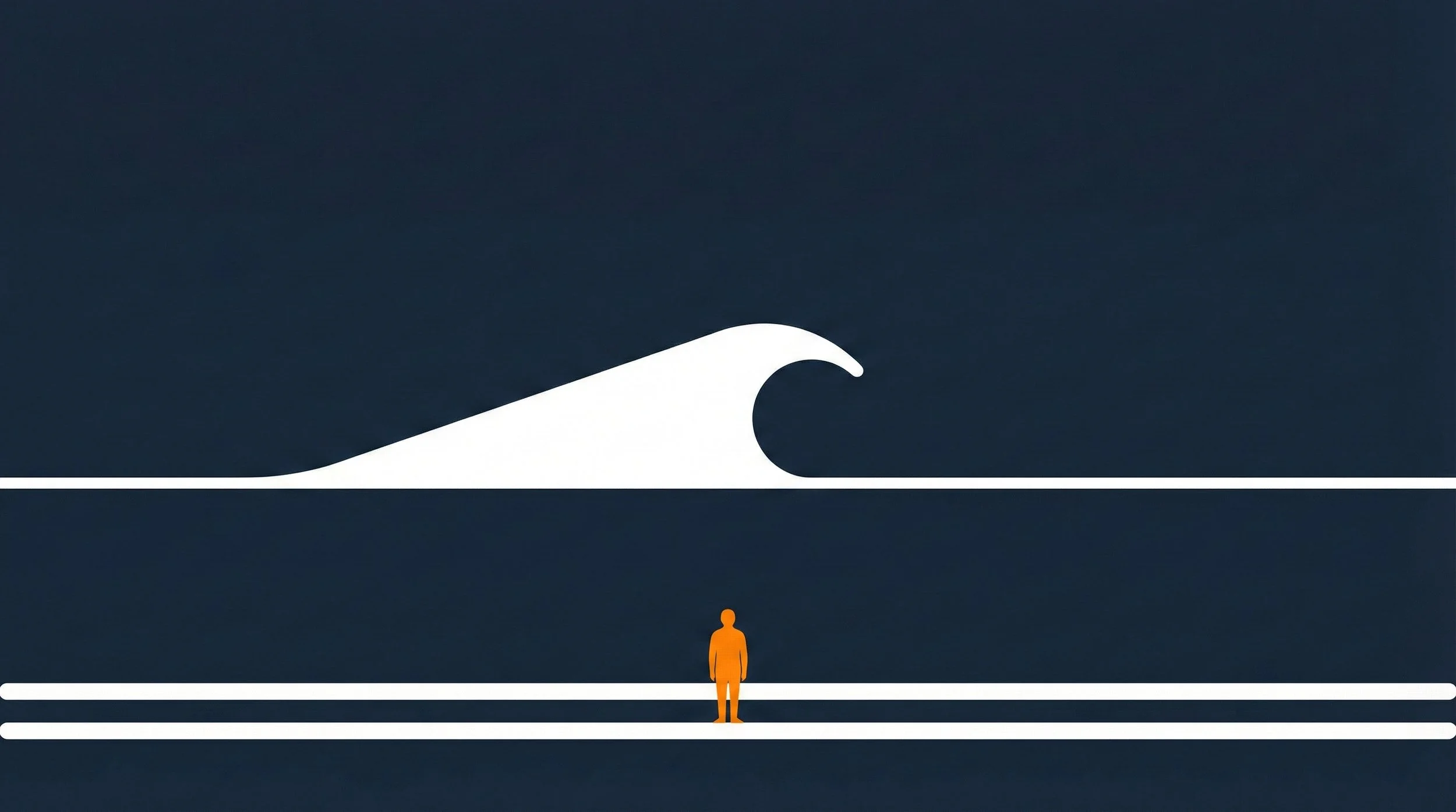
Here's the headline you maybe saw: Kristalina Georgieva, the head of the International Monetary Fund, stood at Davos last month and said AI is hitting the labor market "like a tsunami, and most countries and most businesses are not prepared for it."
And here's the headline from the same week, from Axios, citing Yale University's Budget Lab: the labor market data since ChatGPT launched shows no widespread AI-driven job losses. The overall occupational mix has barely shifted.
Both of these things are true. They're just describing different parts of the same elephant.
Let me show you what's actually happening.
THE PART THAT ISN'T HAPPENING (YET)
The mass displacement story, the one where AI rolls through the economy and millions of workers lose their jobs overnight, is not happening.
Not yet.
Axios reported that the deterioration in the job market for young workers actually began before ChatGPT was widely available, coinciding with the Federal Reserve's aggressive interest rate tightening in 2022-23.
The Fed cooled a hot labor market. That's a lot of what we're seeing.
And Deutsche Bank analysts warned that "AI redundancy washing will be a significant feature of 2026" - companies attributing job cuts to AI that have other causes.
So when you hear a company announce layoffs and blame AI, take it with some salt. Sometimes it's real. Often it's cover for decisions that would have happened anyway. (Looking at you, Jack Dorsey.)
The broad labor market is not collapsing. That's the truth.

THE PART THAT IS HAPPENING
Here's where it gets more specific - and more important.
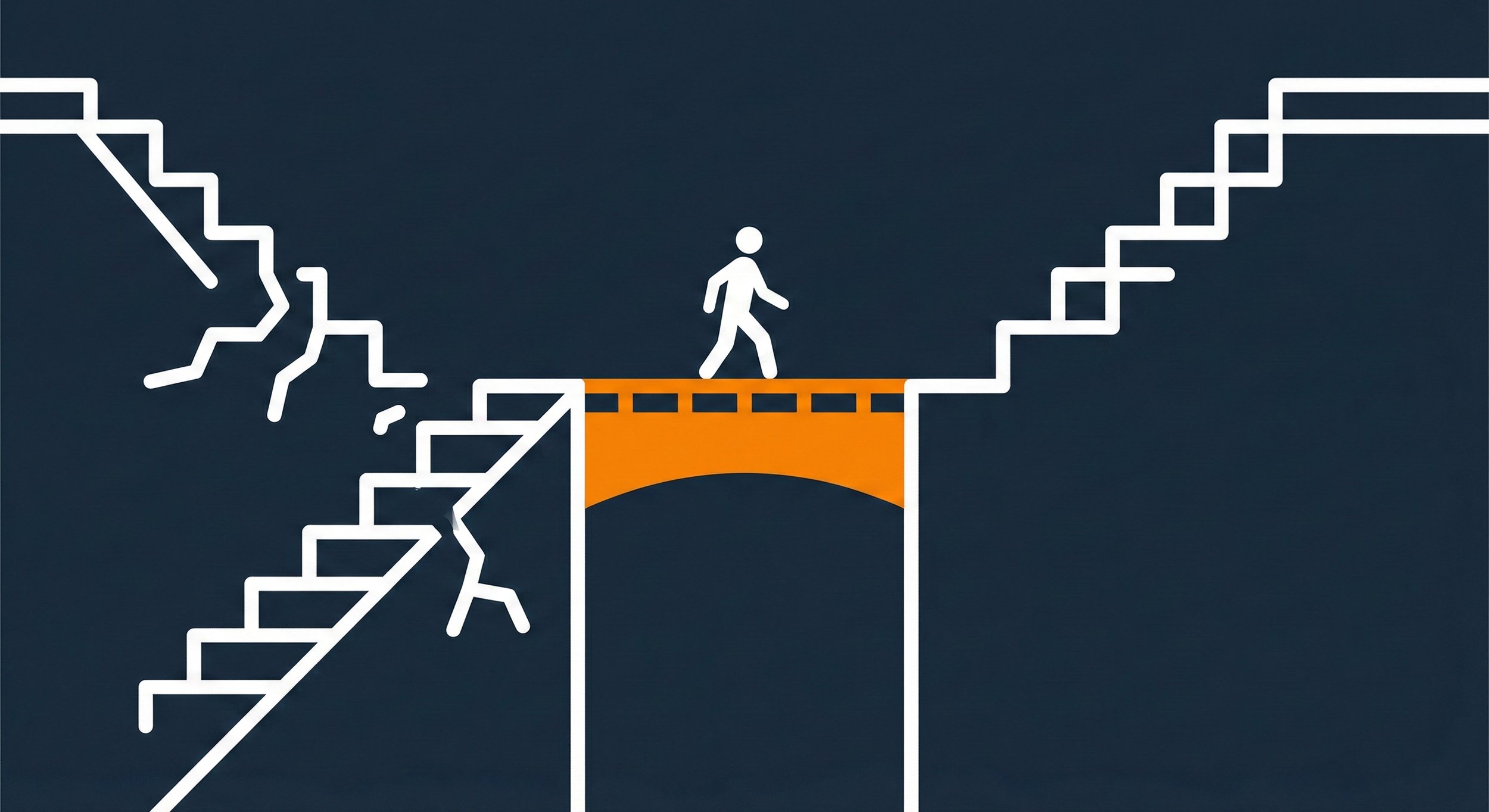
The disruption isn't happening through mass layoffs. It's happening through the bottom of career ladders quietly closing.
A Harvard University study tracking 62 million workers across 285,000 US firms found junior positions "shrinking at companies integrating AI" since 2023, warning that AI is "eroding the bottom rungs of career ladders" by automating the intellectually routine tasks that junior employees typically handle.
Entry-level hiring at the 15 biggest tech firms fell 25% from 2023 to 2024.
Employers are projecting just a 1.6% increase in hiring for the class of 2026 compared to 2025 — and employers' rating of the job market for college graduates is now at its most pessimistic since 2020.
In Ireland, which has a high concentration of tech and financial services employers and serves as an early warning system for the US — employment among workers aged 15 to 29 in at-risk sectors declined, even as employment for prime-age workers aged 30 to 59 in those same sectors grew by 12%.
This is the pattern. Not mass displacement. A closing door at the bottom, and a widening gap between those with experience and those without it.
The traditional deal of entry-level work - you do the grunt work, you learn the craft, you climb - that deal is being renegotiated. AI is doing a lot of the grunt work now. Which means the path from "new hire" to "trusted contributor" is getting compressed, complicated, and for some people, simply harder to find.
WHY THIS ACTUALLY MATTERS FOR YOU
Here's where I want to get behavioral about it, because that's what this newsletter is for.
The people who are winning in this environment share one thing: they came in with demonstrable AI fluency. Not theoretical knowledge. Not a certification. Actual daily, practical comfort using AI tools to do real work faster and better.
IBM just announced it's tripling its Gen Z entry-level hiring - explicitly betting on the AI fluency of younger workers. The CEO of Cognizant told Fortune: "I can take a school graduate and give them the tooling so they can actually punch above their weight. AI is an amplifier of human potential."
And from Dropbox's Chief People Officer, talking about Gen Z's AI skills relative to their older colleagues: "It's like they're biking in the Tour de France and the rest of us still have training wheels."
Read that again. An entire generation of professionals - experienced, credentialed, senior - is being lapped by younger workers who grew up comfortable with AI as a thinking partner.
That should feel like a wake-up call, not a relief.

THE FRAMEWORK: TWO KINDS OF EXPOSURE
I think about AI's labor market impact in two buckets, and it helps clarify who's actually at risk.
Bucket One: Tasks you do that AI can now do faster and cheaper. This is where the displacement anxiety lives. And it's real - for specific tasks. Data entry. First-draft writing. Basic code generation. Routine research. If your job is mostly these things, the pressure is genuine and growing.
Bucket Two: Judgment about which tasks matter, how to apply them, and what good looks like. This is where AI cannot replace you. The ability to brief a complex project. To know when the AI output is wrong. To build the relationship that makes the work matter. To ask the question nobody thought to ask.
The people getting squeezed are the ones living almost entirely in Bucket One. The people thriving are the ones who've moved their time into Bucket Two - using AI to handle the former so they can focus on the latter.
The behavioral shift the AI Mindset has always been about - treating AI as a thinking partner, not a search engine - is now also career strategy. It's about more than productivity - you have to move yourself into the bucket that AI can't touch.
GENERATIVE AI TIP OF THE WEEK
If you manage people, especially early-career people, this is the most important thing you can do right now.
Give them a real project, a real AI tool, and get out of the way. Not a tutorial. Not a workshop. An actual piece of work that matters, with the instruction to use AI however they need to get it done. Then debrief on what they built, how they built it, and what they'd do differently.
Two things will happen. You'll see who already has genuine AI fluency. And you'll create the kind of learning environment where AI skills develop through doing - which is the only way they actually develop.
The companies winning the talent war in 2026 are the ones with the best AI habits at scale. That’s a culture thing. And you can do that.
REMEMBER THIS
The tsunami headline and the "nothing to see here" headline are both incomplete. The reality is more specific, more actionable, and more urgent than either story admits.
The career ladder is being rebuilt. The new bottom rung isn't "willingness to do grunt work." It's AI fluency - the ability to use these tools daily, comfortably, and well enough to move yourself up into the judgment work that actually can't be automated.
The CEO of Randstad, the world's largest staffing firm, called 2026 "the year of the great adaptation." Not the year of mass displacement. The year when individuals and organizations have to actually reckon with what integration looks like in practice.
That's the behavioral challenge the AI Mindset has always been about. The tools have been available for years. The question - then and now - is whether people will actually change how they work.
The ones who do are going to be fine. More than fine.
Start there.
— Conor
AI Mindset helps professionals and organizations close the gap between AI access and genuine daily fluency — through behavior change, not just training.www.ai-mindset.ai/courses
