
THE MILLION LITTLE HOCKEY STICKS

I was working with the leadership team of a Fortune 10 company (Fortune 10, man!). Tens of thousands of employees. Massive operation. They had done a lot right - invested in the platform, rolled out the tools.
And productivity was going up! Which is great!
So why did they bring in my company?
Because they were stuck in a place we see pretty much everyone that’s doing AI pretty well:
Productivity was edging up, but in a slope. A nice, gentle, upward slope. A slope they would have killed for a few years ago…before AI.
But they wanted the hockey stick. So they called us.
The promise of AI isn't a slope, friends. The promise is a hockey stick. That explosive curve where innovation takes off.
What was going wrong?

THE SLOPE TRAP
Here's what I found when I dug in:
People were using AI to do the same work, slightly faster. Better emails. Quicker summaries. Cleaner first drafts.
That's the Google Brain problem I talk about all the time. We treat ChatGPT like a slightly better search engine. A speed boost.
And look - speed is nice. But nobody is going to reinvent their organization with a slightly faster email draft.
That's a slope. That's incremental. That's a poster of a Picasso.
The hockey stick comes from something completely different.
It comes from reinventing how you work.
WHAT POWER USERS ACTUALLY DO
Here's what I've noticed about the people who have truly figured this out:
They haven't sped up their old work. They've completely changed what their work looks like.
They looked at their processes - the actual way they do things every day - and reimagined them from the ground up.
That's the hockey stick. That's where the magic is.
But here's the challenge nobody talks about:
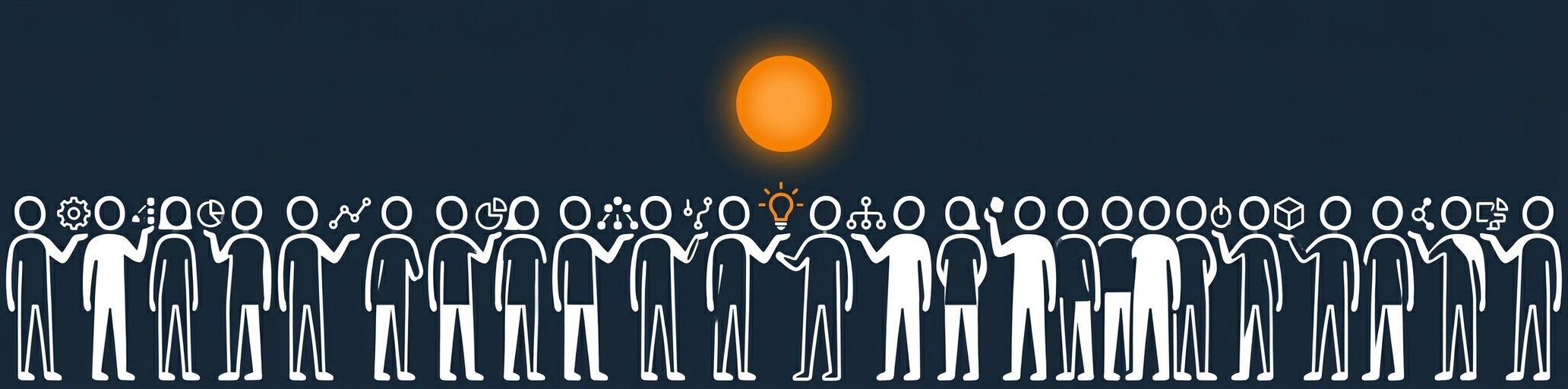
Your organization doesn't have one process. It has a million processes.
The person in HR who handles onboarding has different processes than the person in finance doing forecasting, who has different processes than the marketing team building campaigns.
And the people who know those processes best? Not the C-Suite. Not the consultants. Not the AI Task Force.
The workers themselves.
Which means this can't come from the top down.
Leadership can't hand everyone the same playbook and call it a day. That works for a CRM migration. That works for switching from Slack to Teams.
But this isn't a digital transformation. It's a behavioral transformation.
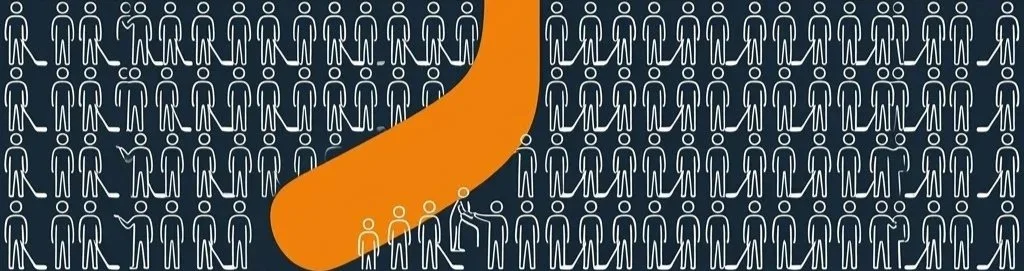
So if you want one big hockey stick for your organization, you need a million little hockey sticks. Every employee. Every process. Every team figuring out how to reinvent, not just improve.
HOW TO BUILD A MILLION LITTLE HOCKEY STICKS
Alright, let's get tactical.
STEP 1: STOP OPTIMIZING. START REINVENTING.
Most companies invest in the tool, build a prompt library, put together a cluster of AI champions, and hope everyone just kinda picks it up.
Worst case is that people don’t use AI at all, or very little.
Best case in a lot of organizations I see is that people DO use AI, but they fall into the time paradox - doing more work faster, but not really seeing a ton of extra productivity.
Because they’re not focusing their time saved on innovation. They’re using it to do more…stuff.
That creates a slope. Not a hockey stick.
A use case is a one-and-done thing. "Here's how to summarize a document." Great! But a slope.
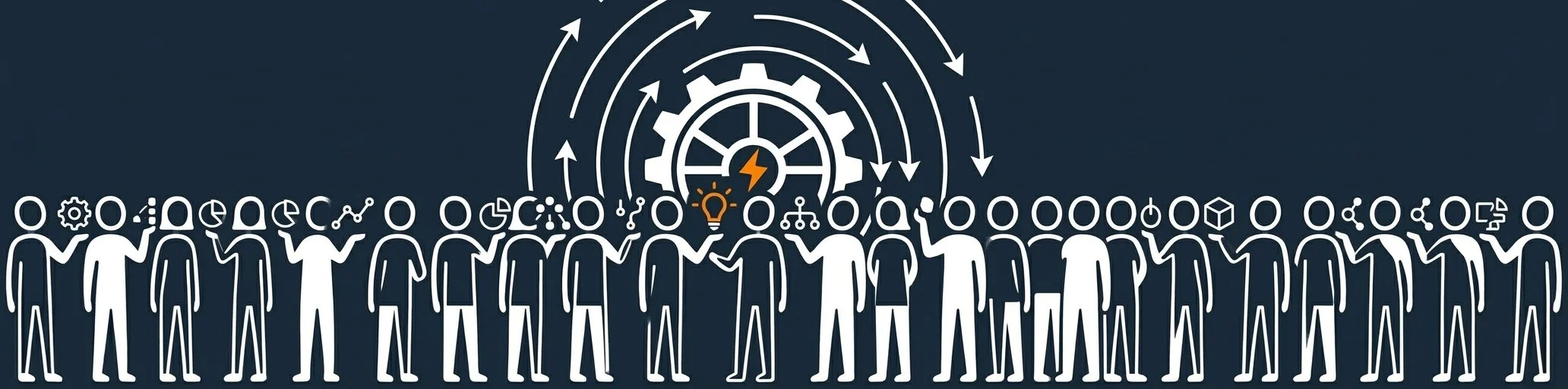
A process change is a flywheel. Once someone figures out how to fundamentally reimagine how they approach their job, they keep going. They find the next process. And the next one. It compounds.
Your goal isn't to give people better outputs. It's to get them questioning every process they own.
STEP 2: UPSKILL EVERYONE. NOT JUST THE ENTHUSIASTS.
One power user can't carry an organization of tens of thousands. You need power users everywhere.
And I don't mean "show them how to use ChatGPT" upskilling. I mean teach them to think differently about their work. That's the AI Mindset piece. You cannot skip it.
This is where most companies go cheap. They do lunch-and-learns. They send around a PDF of prompts. They point to the super user on the team and say "go ask Sarah."
That's not training. That's hoping.
Real training changes how people see their work. It rewires the brain from "How do I do this faster?" to "Why am I doing it this way at all?"
That's the difference between a slope and a hockey stick.
STEP 3: LET THE WORKERS LEAD.
This is the one that trips up leadership.
You cannot design a million process changes from the top. There are too many processes. They're too specific. They live in the heads of the people doing the work every single day.
So your job as a leader isn't to hand down the innovation playbook. It's to create the conditions for a million people to write their own.
Train them. Give them permission. Give them time. Then get out of the way.
Because once that flywheel starts spinning - once one team reinvents a process and another team sees it and thinks "wait, I could do that too" - it's unstoppable.
That's your million little hockey sticks.
BIG TAKEAWAYS
The slope is doing old work faster. The hockey stick is reinventing the work itself.
This can't come from the top down because no one at the top knows all the processes. The workers do.
That means you have to upskill the entire organization - not with prompts and use cases, but with a new way of thinking.
One hockey stick won't transform your company. A million little ones will.
And it starts by investing in your people, not your platform.
When you’re ready, AI Mindset can help with that.
