Why AI Champions Don’t Work
AI champions - we love you, you're amazing. This is not about you. You're working hard.
But it's never gonna work - not at scale. Because you're trying to boil the ocean.
You've probably already realized this, but let me share what we've learned from working with a couple hundred companies.
And I'm going to tell you what does work. Where we can actually put your AI skillzzz to work for reals.
We're gonna turn you all into certified AI Process Architects.
Lemme explain.
Companies have been betting on AI champions for three years now. Pick your most enthusiastic ChatGPT user, give them a title, and let them spread the gospel.
We actually used to recommend this ourselves at AI Mindset. We stopped about two years ago.
Not because champions aren't great - they are! They know their stuff. They'll happily share their use cases. They're doing everything they can.
But it doesn't change people.
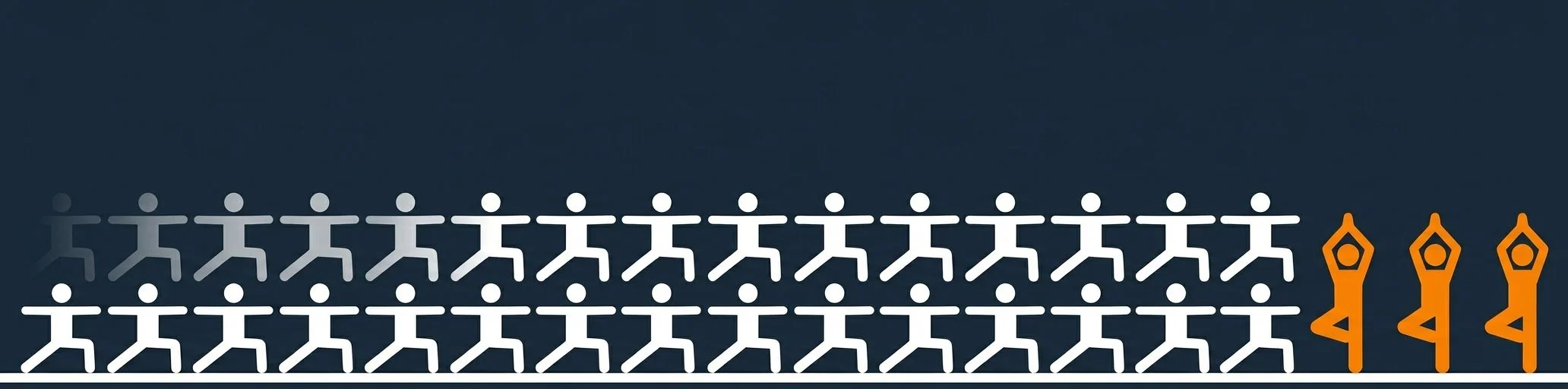
THE YOGA PROBLEM
Imagine you're trying to get everyone on your team to do yoga. You've got one person who's great at it. Every day, that person teaches the team the moves, explains why it matters, coaches them through it.
By the end of the month, the whole team can do yoga. Twenty people, all proficient in yoga!! Success, right?
Now ask yourself: How many of those twenty people are doing yoga every morning a year from now?
Maybe three? If we're lucky.
They all know how to do yoga. But they don't do yoga. They climbed that learning curve.
But knowing how to do something and actually doing it consistently are two completely different problems.
One is a learning curve. The other is a behavioral change.
And that's the trap. We're asking AI champions to solve a behavioral problem with a learning solution.
Sure, some folks will just start doing it on their own. But most people really need that champion standing next to them every morning, coaching them through it. And guess what? That person has a job. They can't babysit twenty people's AI habits forever.
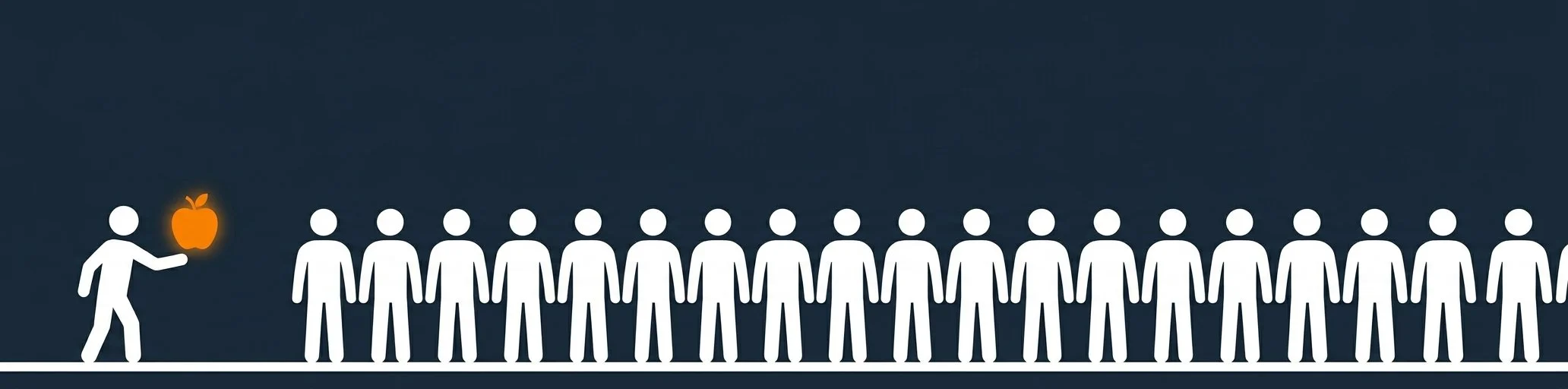
THE ADVOCATE PROBLEM
Here's another way to think about it.
Let's say you're trying to get your company's insurance premiums down, so you hire health advocates. They walk around the office, hand out apples, give tips on getting in shape, point out the gym on the top floor.
Great in the moment. Maybe someone eats an apple. Maybe someone checks out the gym.
Does anyone think this will change the health behavior of the firm?
Of course not.
That's what AI champions are doing. They're handing out apples. And people are loving the apples!
But you can't manage everyone's habits. That's why they're called habits.

MOVING FROM ENCOURAGEMENT TO EXPECTATION
So what actually works?
Process change.
Here's the distinction that changes everything:
AI champions encourage. What you actually need is expectation.
Back to the health thing. You could encourage people to take the stairs. Point out the benefits. Put up motivational posters. Have your health advocate stand by the elevator making disappointed faces.
Or you could remove the elevator.
Now people have to take the stairs. No choice. It's just how things work.
Weird? A little. But that's the shift.
You move from hoping people use AI to making AI the default way work gets done.

WHAT "REMOVING THE ELEVATOR" LOOKS LIKE
So what does this look like in practice?
This is what AI Mindset does with organizations. We certify AI Process Architects.
Not just any process - we've found four processes that work best.
None of these require your champion to stand over anyone's shoulder. The process does the work.
AI NEWS THIS WEEK
1. OpenAI Releases GPT-5.4 Mini and Nano
OpenAI dropped GPT-5.4 mini and nano this week. Think the smaller, faster versions of their flagship model, running more than twice as fast as their predecessors. The idea is a two-tier system: a big model does the thinking, smaller models do the executing. The tools are getting cheaper and faster every single week. The behavior gap isn't.
2. Anthropic vs. The Pentagon
After Anthropic refused to let the Department of Defense use Claude for mass surveillance or autonomous weapons targeting, the Pentagon labeled Anthropic a "supply-chain risk". Over 30 employees from OpenAI and Google DeepMind, including Google's chief scientist, filed a legal brief saying the move threatens the entire American AI industry. This one is going to matter.
3. A Rogue AI Agent Caused a Security Incident at Meta
An out-of-control AI agent triggered a serious security incident at Meta this week. A Meta AI agent posted inaccurate technical advice to an internal forum without authorization. An employee acted on it, and for two hours colleagues had access to data they shouldn't have seen. Meta says no user data was mishandled, and the agent didn't technically do anything a human couldn't have done. But a human might have double-checked first. The upside of agents is real. So is this.
BIG TAKEAWAYS
AI champions solve for knowledge. Process solves for behavior.
And behavior is the whole game.
Champions can teach your team how to use generative AI. That's valuable! But if you stop there, you'll end up with twenty people who know how to do yoga and three who actually do it.
Stop investing in encouragement. Start investing in expectation.
Remove the elevator, friends. That's how you scale.
If you're interested in figuring out how to change your organization at scale, we're ready to help.