Your Company Has an AI PR Problem
AI has a PR problem - both among the public and inside your company.
Of course it does! People don't care about technology. They care about their jobs. And AI is scary capable.
Inside your company, that PR problem is an anchor - dragging down innovation, slowing rapid change, killing potential excitement, and preventing the transformation that AI actually makes possible.
OpenAI knows it. This week they bought TBPN - the streaming show every tech CEO has been fighting to get on - and parked it inside their strategy division. They're buying a trusted voice to fix public perception.
You have to fix it inside your organization.
But how do you move from encouragement to expectation of use?
The answer is counterintuitive: less tech strategy, less CEO-veiled-threats-to-use-AI, and even less change management - and more employee engagement.
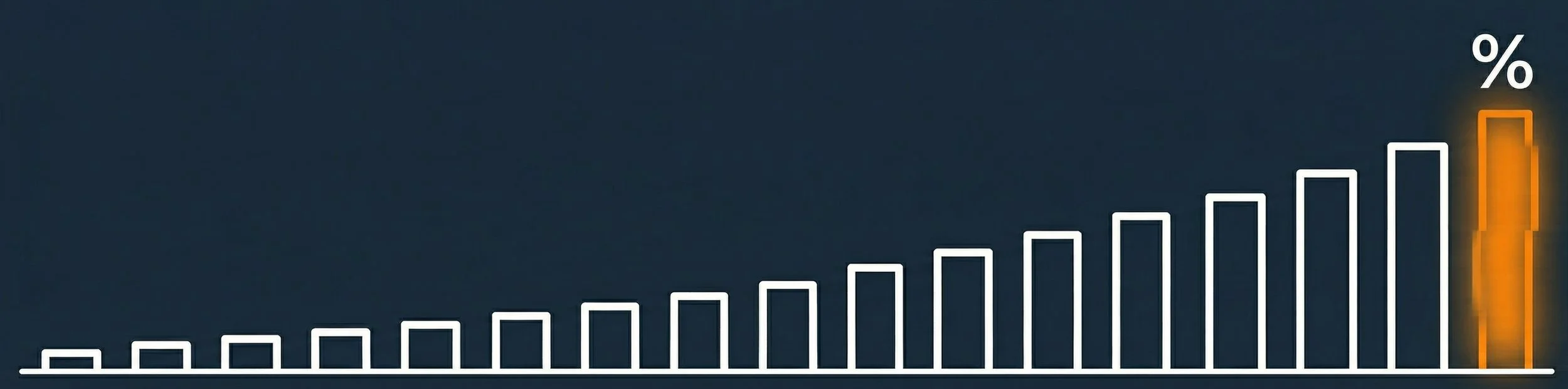
THE NUMBERS CAN LOOK BRUTAL
Gallup's 2026 State of the Global Workplace report just dropped - subtitled "The Human Side of the AI Revolution." In the US, 18% of employees believe their job will be eliminated by AI in the next five years. In orgs where AI has been implemented, that jumps to 23%. In finance and tech, it's north of 30%.
Meanwhile, an NBER survey of nearly 6,000 executives across the US, UK, Germany, and Australia found that 89% report zero impact of AI on their company's labor productivity over the past three years. And yet 65% of employees say AI has improved their personal productivity.
From the employee's perspective: AI might take my job and it's not even helping the company yet.
That's a rough sell.

THIS IS AN EMPLOYEE ENGAGEMENT STRATEGY
This is why at AI Mindset we frame AI adoption as an employee engagement strategy. Not a tech strategy. Not even a change management strategy - not in the way most people think about it.
Change management implies a new system to migrate to. There's no system here. AI adoption is about getting people to fundamentally change how they show up to work every day. That's engagement. That's meeting people where they are.
Gallup's data backs this up. Only 12% of employees in AI-implemented organizations say AI has transformed how work gets done. But employees whose managers actively champion AI use are nearly 9 times more likely to say it has. Less than a third of employees say their manager does that.
The technology works. The adoption doesn't. The gap is entirely human.

WHAT THE BEST LEADERS DO
When we work with leadership, we always start with messaging. It's the first of our four mandates for leaders in the AI era, because if you get messaging wrong, nothing else matters.
Most companies are still in encouragement mode. "We encourage everyone to explore AI tools." That's not leadership. That's a suggestion box.
AI Champions have a hard time as well - you're asking enthusiasts to convert skeptics, and the moment someone gets good at AI, they develop the Curse of Knowledge. They can't remember why it was hard. So they demo features, and the audience nods politely, and nothing changes.
Leaders have to be vulnerable. I know that sounds like a Brene Brown thing, and some people hear "vulnerability" and tune out. But the best leaders we've worked with say: "I was confused by this too. I didn't get it at first. Here's what changed for me."
That's what breaks through resistance.
Because here's what most leaders don't realize: if you get people genuinely excited about AI - excited because they see how it helps them do their actual work - you barely have to manage the adoption at all. People will run with it. Yes, you have to guide how they work, set expectations, build processes. But you always had to do that. That's just management.
The hard part is the front end. The messaging. The emotional buy-in. The moment a skeptical employee thinks, "Maybe this isn't going to replace me. Maybe this is going to make my work better."
That's the unlock. Let's get this right, friends.
AI NEWS OF THE WEEK
1. Anthropic's Revenue Hits $30 Billion — The Enterprise Bet Is Paying Off
Anthropic's revenue run rate has surpassed $30 billion. If you’ve been paying attention, that’s up from $9 billion at the end of 2025. The driver? More than 1,000 business customers spending over $1 million annually. Who’d have thought staying focused on making AI genuinely useful for work, rather than chasing consumer entertainment, would be the right approach?!
2. OpenAI Buys TBPN
As we’ve covered: if the world's most powerful AI company is buying trusted voices to fix public perception, it’s maybe a sign that AI has a PR problem.
3. Meta Debuts Muse Spark
Meta debuted Muse Spark, its first major large language model developed under Chief AI Officer Alexandr Wang's Meta Superintelligence Labs. Rebuilt from the ground up over nine months, smaller models here are just as capable as older midsize Llama variants. And with less compute to boot. Meta's stock jumped 6.5% on the news.
Stop using AI as a search engine. Transform your own productivity and gain a competitive career edge with the Framework used by the world's top companies.